

The Communities Your Organization Is Missing - And How Three Nonprofits Found Them
Three nonprofits - the Immune Deficiency Foundation, Warrior GMR Foundation, and The Trevor Project - share how they reached audiences through gaming, Discord, and creator communities, and what communicators can learn from them.
.png)

Your audience has shifted. They're on Discord servers at 2 AM, watching Twitch streams, and building community around causes they care about - whether or not your organization is part of the conversation.
That was the throughline of a recent National Digital Roundtable briefing, moderated by Anthony Shop, co-founder of Social Driver and chair of the National Digital Roundtable. Three organizations - the Immune Deficiency Foundation, Warrior GMR Foundation, and The Trevor Project - joined to share what it actually looks like to show up in these spaces. What they described wasn't a trend. It was a fundamental shift in where trust, identity, and belonging are built.
The Immune Deficiency Foundation: $2.5 Million and a Lesson in Letting Go
Four years ago, the Immune Deficiency Foundation received an email from someone they didn't know. She thought she might be able to raise $10,000 for them.
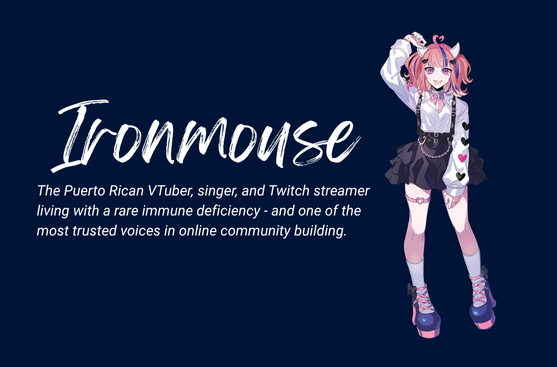
That person was Ironmouse - a VTuber with millions of followers who lives with Common Variable Immune Deficiency and advocates for immune deficiency awareness through an animated avatar. Her real identity remains private. What happened next was not.
The fundraiser happened overnight. By morning, she had raised $108,000. In the four years since, Ironmouse has raised $2.5 million for IDF - including $1.5 million in just 48 hours in 2024, after she publicly revealed that her former talent agency had withheld a $515,000 charity donation. More than 1.5 million people watched that announcement. IDF became the center of a national story overnight.
Their social media team responded in real time, with authenticity rather than a polished crisis plan. It worked.
Tammy Black, Chief Communications Officer at IDF, distilled the lessons clearly: transparency builds lasting trust; the organizations that survive crises aren't the ones with the best playbooks, they're the ones with the strongest relationships. And perhaps most importantly - sometimes the most powerful thing you can do is trust enough to get out of the way.
That partnership didn't start with a strategy deck. It started with a comment on a social post, then a podcast appearance, then a song. The $2.5 million came later.
As IDF President and CEO Jorey Berry put it: "Let go of your ego and trust." As a 53-year-old who didn't grow up in these spaces, she learned to take direction from junior team members who were closer to the communities. That lesson applies well beyond gaming.
Warrior GMR Foundation: Gaming as a Lifeline for Veterans
Joshua Otero founded the Warrior GMR Foundation in 2020 after noticing a spike in veteran suicide during the COVID-19 pandemic. Two incidents crystallized it for him: two cadets at the Air Force Academy and six sailors at Virginia Beach all died by suicide within months of each other.
The statistics are sobering. 17.6 veterans die by suicide every day - one life every 81 minutes. Veterans represent 20% of all U.S. suicides while making up just 10% of adults. 60% of veterans report feeling lonely sometimes or often, and those who do have 12 times higher suicidal ideation. Meanwhile, there is a 250,000-person shortage in mental health professionals nationwide.
Josh's insight was simple: veterans are already gamers. 77% of veterans under 40 game, and the average age of a gamer is 34 - close to the average age of a veteran. So rather than trying to pull veterans into new spaces, he went to where they already were.
Warrior GMR Foundation built a private Discord server - now with over 3,200 verified members - that functions as a secure community hub. Inside, members find topic-specific channels, a monthly town hall with VA representatives, and a 24/7 peer support platform where trained veterans can connect with someone in crisis, including at 2 AM when darkness tends to hit hardest.
The results speak for themselves: the organization's reach grew from 45,000 people impacted in 2021 to 14.5 million in 2024. Not by broadcasting louder - by building a space worth belonging to.
The Trevor Project: Creators, Community, and $5.2 Million Raised
Kimberly Spicker, Senior Manager of Global Social Fundraising at The Trevor Project, walked attendees through how creator-led fundraising has become a core pillar of the organization's strategy. Since 2020, The Trevor Project has raised $5.2 million on Tiltify through more than 5,000 campaigns.
The broader data backs up the opportunity. According to Tiltify's 2025 Season of Giving Report, 67% of Gen Z has increased their giving since 2020, 88% of Americans believe creator-led fundraising will become more common than traditional fundraising within five years, and 44% of creators increased their fundraising totals year over year.
The Trevor Project's biggest campaigns have come through Jingle Jam, an annual streaming event organized by Yogscast (7.1 million YouTube subscribers). In 2025, creator Smosh Games ran a 90-minute karaoke livestream that raised $75,000 - double their previous year. Another creator, RTG Game, streamed over two weeks and raised $187,000 for Trevor in 2025 alone.
Kimberly's advice for organizations wondering where to start: you don't need to build your own Discord server or creator program from scratch. Go to YouTube, Twitch, or TikTok and search for your cause. Creators may already be talking about you.
The Bigger Shift: From Channels to Communities
The most important theme running through the entire briefing wasn't any single platform or partnership. It was a mindset shift.
Most organizations think in terms of channels - TikTok, Discord, Twitch. But all three panelists were unanimous: the platform is not the point. The community, the culture, and the trust that already exists there - that's the point.
As Tammy Black put it: "We think in terms of communities instead of channels. This is almost the opposite of traditional social media. We're not throwing something out into the universe - we're listening and asking, 'Where might we be welcome to have a conversation?' And then we jump in and introduce ourselves."
Practical First Steps
Perhaps the most memorable line of the session came from Anthony Shop in his closing: "Prepare for everything, including the good."
Each panelist closed with one concrete piece of advice for organizations ready to act:
Kimberly Spicker, The Trevor Project: Search your cause on YouTube, Twitch, and TikTok. See who's already talking about it. Start there.
Josh Otero, Warrior GMR Foundation: Look for communities that already exist before you build your own. Find one you're aligned with and partner with them.
Tammy Black, Immune Deficiency Foundation: Involve your community in what you're building. Ask questions. Let their feedback reshape your plans.
Jorey Berry, Immune Deficiency Foundation: "Let go of your ego and trust." The people closest to these communities - even if they're junior colleagues - may be your best guides.
Gaming, Discord, and creator communities are places where people build identity, belonging, and trust. For organizations willing to show up with humility, listen first, and bring real value, the opportunity is enormous.
Watch the full recording here.
Learn more about the National Digital Roundtable at nationaldigitalroundtable.org.